Transforming a house does not start with choosing a paint color or a new floor covering. The technical starting point, often overlooked, concerns the condition of the building itself: wall moisture, air circulation, condition of load-bearing surfaces. Without this prior diagnosis, beautification work may mask issues that will worsen over time.
Moisture and ventilation: the diagnosis before any transformation
The ADEME recommends diagnosing and remedying leaks before any interior insulation. Insulation placed on a damp wall traps water in the structure and accelerates degradation. Rising damp, micro-cracks on facades, failing window seals: these points must be identified first.
A moisture survey over several days, using a hygrometer placed against the suspect walls, allows for distinguishing between temporary condensation and a structural problem. The difference determines the type of intervention: a simple adjustment of ventilation or waterproofing work.
After insulation work, maintaining the VMC becomes a task in its own right. Cleaning the extraction vents, checking air passage under interior doors, and keeping filters clean prevents condensation and mold. To discover the BricoNet site, the practical sheets group this type of checks by technical area.
Mold in the house: intervention thresholds to know
A cleaning with white vinegar is sufficient for an isolated stain on a bathroom seal. But Anses distinguishes three levels of severity that change the course of action.
- Cumulative surface area less than 0.2 m²: cleaning by the individual with suitable products, followed by a correction of ventilation to prevent recurrence.
- Between 0.2 and 3 m²: remediation recommended, preferably entrusted to a professional capable of identifying the source of moisture.
- Beyond 3 m²: the situation constitutes a criteria of unsanitary conditions and requires professional intervention with treatment of the structural cause.
Many homeowners remain at the surface cleaning stage without ever measuring the actual extent. Taking five minutes to assess the affected area, even approximately, directs towards the right technical response.
Maintenance of common surfaces: method and products
Cleaning becomes more effective when each surface receives the appropriate treatment, rather than a universal product applied everywhere.
Wood, tiles, and stone
Waxed or oiled wood is cleaned with very wrung warm water, without aggressive detergent that dissolves the protective layer. Tiles can withstand a neutral pH cleaner; the joints, on the other hand, are treated separately with a baking soda paste applied with a brush.
Natural stone (travertine, slate, marble) reacts poorly to acids. White vinegar, often presented as a miracle product, attacks limestone and dulls its surface. A diluted black soap is more suitable.
Melamine and laminate furniture and surfaces
Melamine or laminate furniture requires only a damp microfiber cloth. Grease stains in the kitchen can be removed with a few drops of diluted dish soap. For smoke stains on painted walls, a sponge soaked in soda crystals dissolved in hot water remains the most reliable method, followed by immediate rinsing.
Transforming an interior without major work: high-impact areas
Some interventions change the perception of a space without touching the structure. Three areas concentrate the most marked visual effect for a limited budget.
The first concerns lighting. Replacing a central ceiling light with multiple sources (wall sconces, floor lamps, recessed LED strips) changes the perceived volume of a room. This is a project that can be completed in a weekend if the existing electrical circuit allows it.
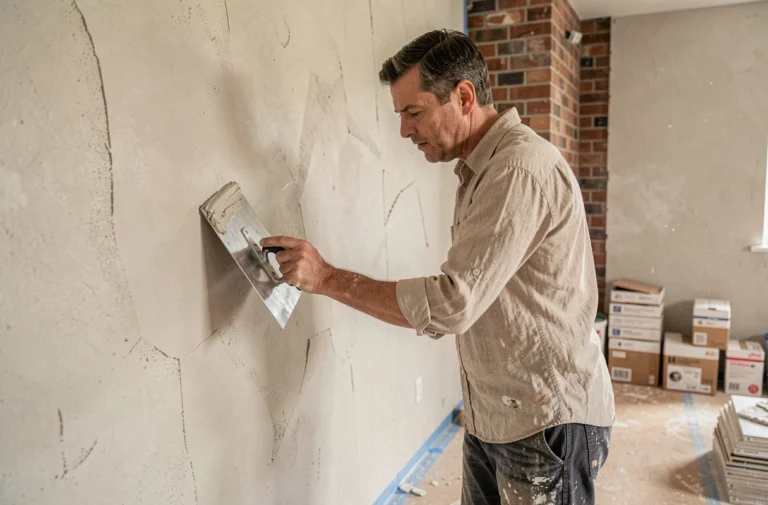
The second focuses on wall coverings. A mineral effect paint, a troweled plaster, or a panoramic wallpaper on a single wall is enough to renew a room. Preparing the surface (filling, sanding, primer) represents the majority of the work time, not the installation itself.
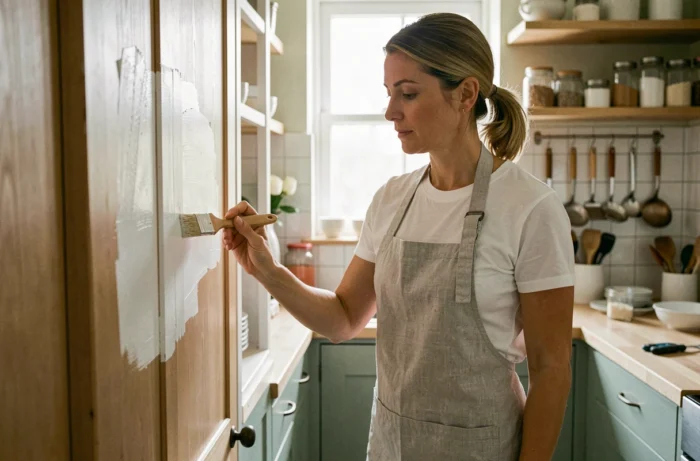
The third area, often underestimated, is hardware. Door handles, cabinet knobs, faucets: these elements can be replaced without heavy tools and create a cohesive style at a lower cost.
Renovation aids in 2026: what has changed
Subsidies are now oriented towards global renovation projects rather than isolated actions. Changing only windows or installing a thermodynamic water heater without addressing the building envelope leads to reduced aid.
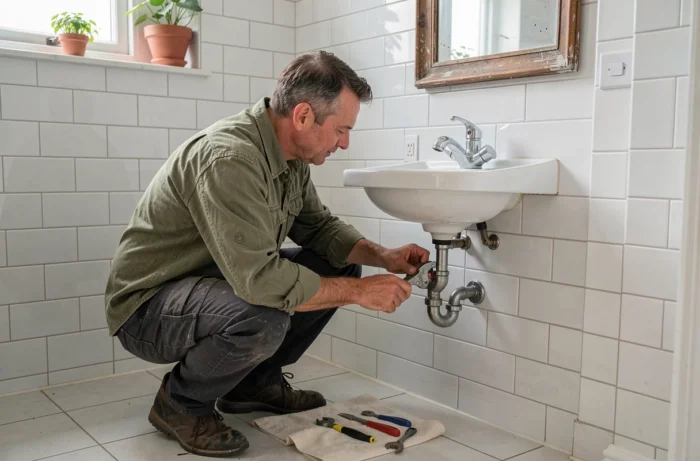
For elderly homeowners, specific programs like MaPrimeAdapt’ fund housing adaptations from the age of 70: replacing the bathtub with a walk-in shower, installing grab bars, widening doors. These works fall under both transformation and maintenance, as they extend the duration of autonomous living in the home.
Maintaining and transforming a house ultimately involves the same reflex: observing the actual condition of the building before acting on its appearance. A healthy wall can be repainted in a day. A poorly diagnosed damp wall will cost three successive interventions, each heavier than the last.