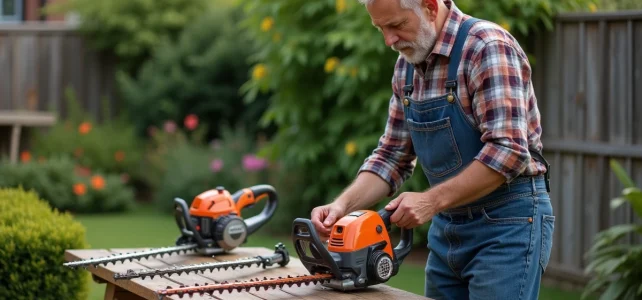
A blade that is too short will put your arms to the test. A sluggish motor will test your patience, sometimes for no reason. Some hedge trimmers shine with their technical specifications but struggle with tough bushes. The blade length, often relegated to the background, actually determines the precision and speed of execution.
Between power supply, handle shapes, and maintenance requirements, the choice is more complex than it seems. Even seasoned gardeners can hesitate in front of the diversity of models. However, certain technical criteria can help clarify the selection of an effective tool, suitable for both the structure of the hedge and the pace of interventions.
Understanding the different types of hedge trimmers to target the model suitable for your garden
The hedge trimmer is often considered a mundane object. In reality, each garden dictates its own rules. Three main categories stand out in the current market: corded electric, cordless battery, and gas-powered. The power source directly influences the power, maneuverability, and autonomy of the device.
Here are the main uses of each technology:
- The corded electric hedge trimmer is intended for small spaces, provided the outlet is not too far away. Lightweight and discreet, it is up to the task for the regular maintenance of fine hedges.
- The battery-powered hedge trimmer offers total freedom of movement. Its autonomy depends on the built-in lithium-ion battery, but most domestic hedges (laurel, thuja, rose) adapt well to it. Recent 18V models even compete with some gas-powered ones.
- The gas-powered hedge trimmer makes a difference on long, thick hedges or during heavy annual sessions. Heavier and more powerful, it is aimed at those who are not afraid to maintain a gasoline engine.
In addition to this range, several variants are available: pole or telescopic models for reaching the tops, single-blade versions for aggressive trimming, and double blades for quick and clean work. The differences in hedge trimmer prices reflect both the technology and the expected durability.
For more clarity, the resource taillehaie.info offers a detailed analysis and thorough tests under the title ‘ᑕ❶ᑐ Best Hedge Trimmer: Comparison 2026, Tests and Reviews’. A reference point to find the model that will truly fit the configuration of your hedges and the reality of your garden.
What criteria should be prioritized for a truly effective and comfortable choice?
When focusing on hedge trimmers, certain criteria really make a difference. The power of the motor remains the key factor: watts for electric, displacement for gas. As soon as branches thicken or the hedge gains volume, a solid motorization becomes essential. A dense laurel or an adult thuja cannot be tamed by just any device.
The blade length is not just a number. For low borders, 45 cm is more than sufficient. Medium hedges prefer 50 to 55 cm, while large hedges require a blade of at least 60 cm. As for the tooth spacing, it determines the ability to cut thicker wood: between 20 and 30 mm, you can tackle tough branches without flinching.
Ergonomics also plays a role. A lightweight device reduces fatigue during prolonged sessions. The increasingly common rotating handle simplifies vertical cuts. Accessories like a debris collector or protective sheath ensure safe handling. For battery models, check the autonomy (Ah) based on the area to be treated and the frequency of trimming.
In terms of precautions, do not skimp on safety: goggles, gloves, and sturdy shoes are essential. Maintenance, in turn, remains the best ally of longevity: cleaning the blades, lubrication, checking the battery or spark plug for gas models. Choosing a hedge trimmer is committing to a pristine garden… and for a long time.
Personalized recommendations and expert advice to advance your project
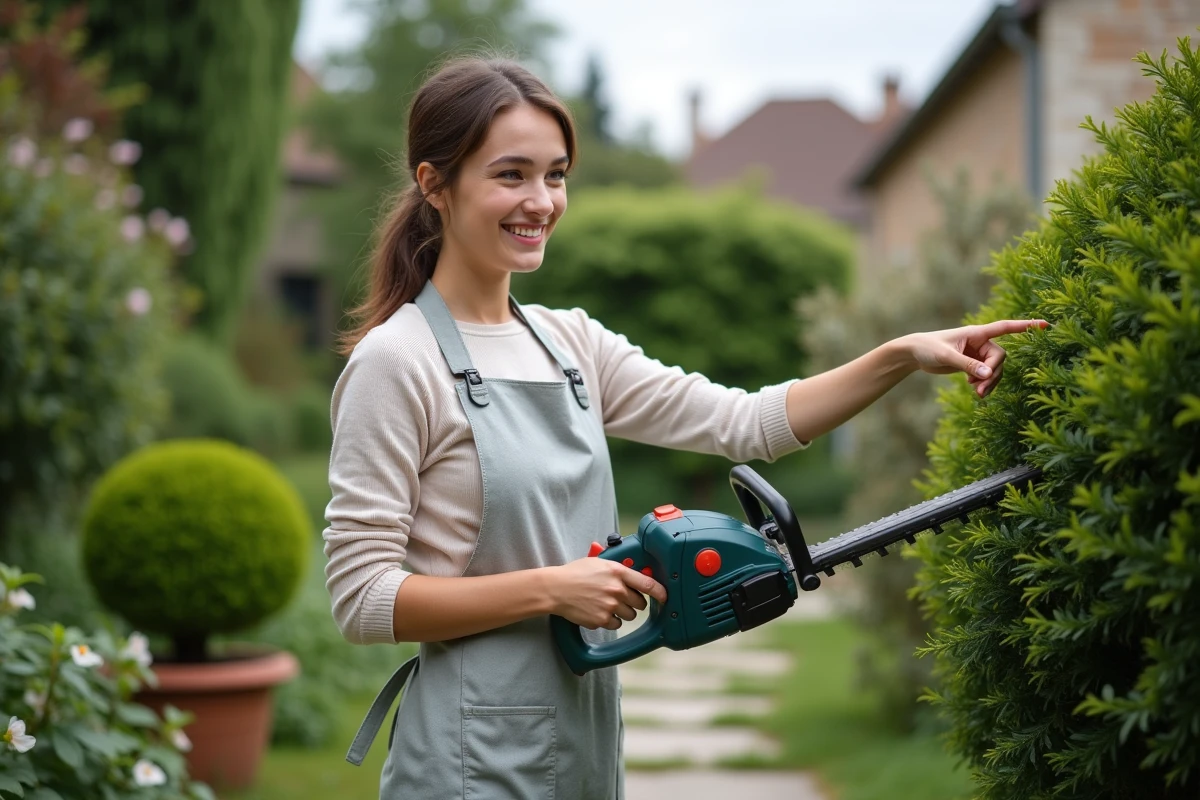
Each configuration requires a tailored response. For the regular maintenance of a family garden, corded electric or battery hedge trimmers remain reliable choices: maneuverable, compact, perfect for classic hedges (laurel, thuja, rose). If the outlet is close, the corded model will suffice. Otherwise, the battery ensures appreciated freedom of movement, provided you choose an appropriate capacity.
When faced with a bulky hedge or robust plants, the gas model takes the advantage. Its power and endurance facilitate long sessions, even if the weight and maintenance are more pronounced. For tall hedges, the telescopic pole avoids acrobatics and secures the intervention.
Here are some guidelines to guide your choice:
- For finishing and quick cuts: opt for a double-blade model.
- For aggressive trimming: prioritize a single-blade or a high-performance gas model.
- For frequent trimming: a modern battery model (from 18V) combines comfort and efficiency.
Keep in mind the regulations: planting distances, respect for neighbors (Article 673 of the Civil Code), and nesting periods. The French Office for Biodiversity advises against trimming from March 15 to July 31 to protect birds. The ideal? Intervene in late winter or September, times conducive to a reasoned garden management.
A well-chosen hedge trimmer promises a neat garden, safe actions, and enjoyment that does not wane from season to season. The next cut could very well become your best session.