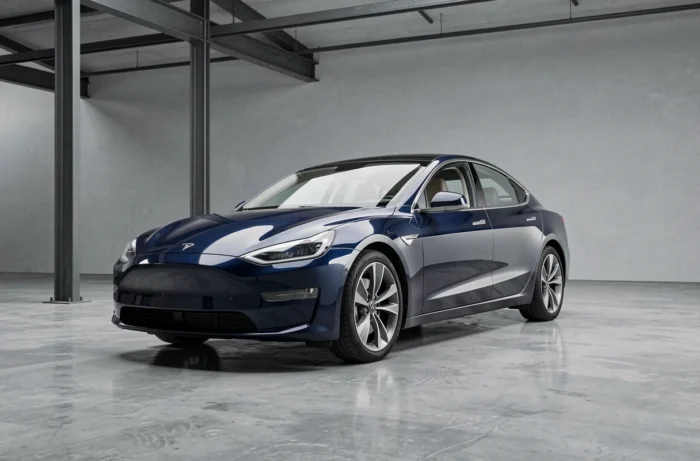
Electric car sales are rising in Europe, manufacturers are launching more models, and emissions standards are getting stricter. The picture seems clear. But behind this momentum, two practical obstacles are slowing the automotive transition: the highly uneven distribution of charging stations and the persistent lag in electrifying commercial vehicles. These issues receive less attention than new models, yet they determine how quickly change actually happens.
Charging stations in Europe: a network that remains too uneven
Have you ever planned an electric car trip to a rural area or a country in southern Europe? If so, you know that finding a fast-charging station can sometimes feel like an obstacle course. The problem is not the total number of charging points, but how concentrated they are in certain areas.
A recent report by ACEA (the European Automobile Manufacturers’ Association) reveals that charging stations remain very unevenly distributed across European countries. The Netherlands, Germany and France account for most of the infrastructure, while large parts of central and southern Europe remain underserved. This imbalance directly slows electric vehicle adoption in these regions.
To keep up with these developments week by week, Signal Auto news offers a way to follow manufacturers’ announcements and the regulatory decisions shaping the market.
Europe’s charging network is growing, but it is still falling short of the targets set by the European Union. The gap between the pace of charging station installations and that of electric vehicle registrations is creating a real strain. Drivers weighing up a petrol or diesel car against an electric one first want to know whether they can charge near home or along their usual routes. Without that assurance, switching to electric remains a theoretical option.
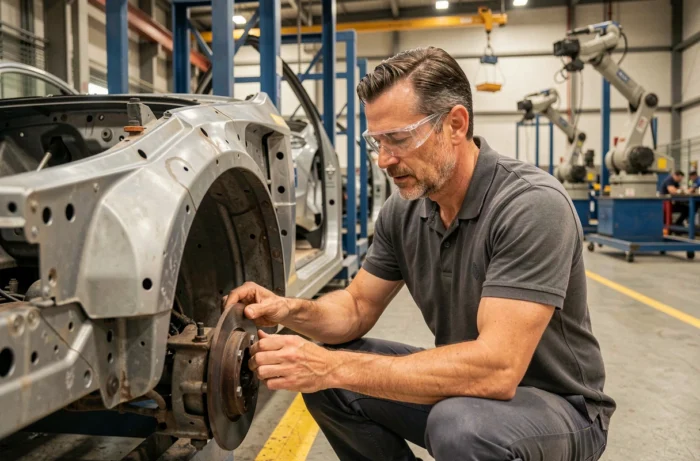
Electric commercial vehicles: the overlooked segment of the automotive transition
When people talk about electric cars, they think of saloons, compact SUVs and city cars. Light commercial vehicles, trucks and buses rarely make the headlines. Yet their electrification is progressing at a much slower pace.
ACEA figures show that diesel remains the dominant powertrain for commercial vehicles and trucks in Europe. The new commercial vehicle market has remained broadly stagnant, and electric models still account for only a marginal share compared with passenger cars.
Why the gap? There are three main reasons:
- The range required of a loaded commercial vehicle often exceeds what current electric models can offer, especially over long distances or when carrying heavy loads.
- Purchase prices remain significantly higher than those of equivalent diesel models, and fuel savings do not always make up the difference over the vehicle’s service life.
- The range of models suited to professional uses (refrigerated vehicles, tipper trucks and high-capacity vans) is still limited compared with the available combustion-engine lineup.
For business fleets, then, the transition is not simply a matter of choosing from a catalogue. It requires a rethink of logistics, on-site charging infrastructure and maintenance schedules.
European CO2 standards for 2035: a proposal, not yet a rule
The 2035 deadline comes up in every discussion about the future of the automotive industry in Europe. It is often presented as a definitive cutoff date for the end of the combustion engine. The reality is more nuanced.
In November 2026, the European Parliament’s Committee on the Environment proposed lowering the emissions reduction target for new cars to 87.5%, rather than 100%. The same proposal would give more favourable treatment to certain compact or highly efficient electric cars manufactured in the European Union.
This text is not yet law. It still needs to be put to a plenary vote and then negotiated with national governments. The outcome remains uncertain, and manufacturers such as Renault, Volkswagen and BYD are adjusting their strategies in response to these signals, without knowing what the final framework will be.
This regulatory uncertainty has direct consequences. European manufacturers are investing heavily in electric vehicles while keeping their combustion-engine platforms in place. Uncertainty over the standards is delaying industrial decisions about factories, suppliers and distribution networks alike.

Differences between European countries: an automotive transition at different speeds
The growth of electric vehicles in Europe masks considerable differences from one market to another. Some countries have high electric vehicle market shares, supported by strong tax incentives and extensive infrastructure. Others remain largely dominated by combustion-engine vehicles.
ACEA data nevertheless confirms that this European average masks very different situations from one country to another:
- In northern Europe, electric vehicles’ market share is well above the average, supported by purchase incentives and favourable tax policies.
- In southern and eastern Europe, sales remain low, held back by lower average incomes, insufficient charging networks and limited public subsidies.
- In France and Germany, momentum is real, but domestic manufacturers (Renault, Volkswagen and Stellantis) face growing competition from BYD and other Chinese brands in the affordable vehicle segment.
This fragmentation complicates the strategies of automotive groups. An electric model that is profitable in Scandinavia may be impossible to sell in Romania, forcing manufacturers to maintain a diverse lineup and driving up development costs.
Europe’s automotive market is moving towards electric vehicles, but not as one. The pace of the transition depends as much on infrastructure and local purchasing power as it does on the range of vehicles available. As long as these conditions remain uneven, the full transition will take time, no matter how many new models are announced each month.