A colleague is retiring, freeing up his office, and three weeks later he calls to say he’s feeling lost. This scenario often repeats itself because the transition from working life to active retirement doesn’t happen on its own. Living a fulfilling retirement after 60 requires a minimum of concrete preparation, not a vague plan to “enjoy life”.
Building a life project before the last day of work
We often underestimate the psychological aspect of retirement. Leaving a routine built over decades creates a void that the first months of vacation do not fill. Preparing for retirement means defining a concrete life project before leaving, not after.
This project doesn’t resemble a career plan. Instead, it’s about identifying two or three structuring activities that will give rhythm to the week. A pottery class on Tuesday, a group walk on Thursday, volunteering on Friday morning. The framework is as important as the content.
The question of meaning also arises. After years where work provided social identity, we need to find that sense of usefulness elsewhere. Associative volunteering works well for this, but one must choose a cause that matters, not just fill a slot. You can regularly find testimonials from retirees who have found this balance by testing several avenues before settling on one on magazine-seniors.com.
A often overlooked point: discussing it with your partner or loved ones. One person’s retirement changes the daily life of another. Laying things out clearly, including budget and personal space, avoids unnecessary tensions in the first months.
Physical activity after 60: finding a sustainable format
Everyone knows that moving is good for health. The real challenge is finding a practice that you won’t abandon after six weeks.
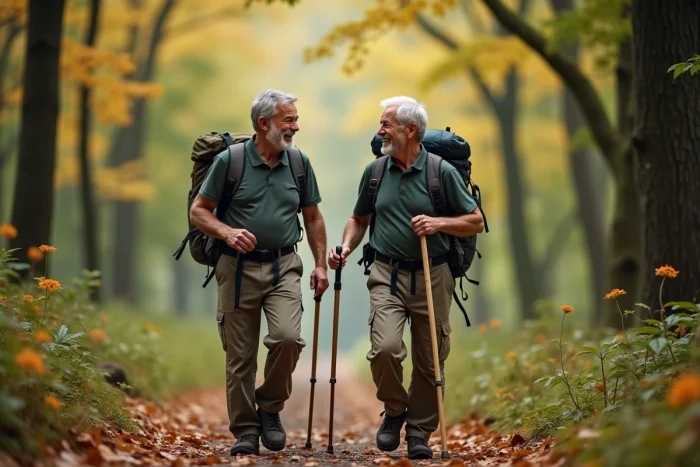
Regular physical activity preserves autonomy much more than occasional intensive sessions. Walking for thirty minutes a day has measurable effects on cardiovascular health and balance. There’s no need to run a half-marathon.
Choosing based on your constraints, not an ideal
You don’t start road cycling at 65 if you have a fragile knee. The activity must adapt to the body as it is, not as we wish it to be. Here are some guidelines to help with the choice:
- Nordic walking engages both the upper and lower body without violent impact on the joints, and is practiced in groups in most communities.
- Swimming or aquagym is suitable for people with joint pain, thanks to the buoyancy of water that reduces mechanical stress.
- Tai chi or gentle yoga improve balance and flexibility, two direct factors in fall prevention.
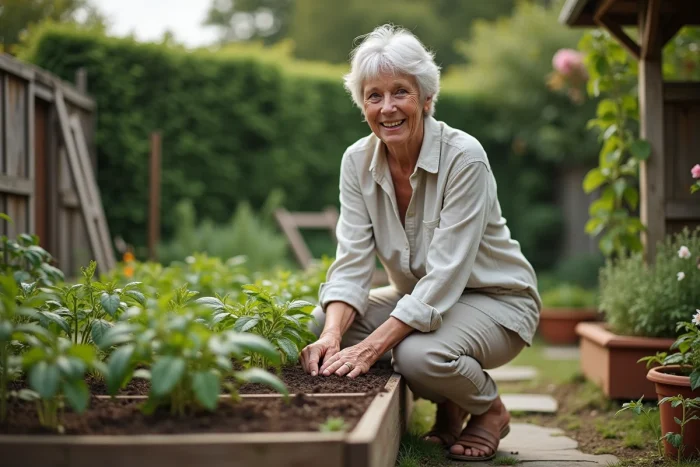
- Gardening, often forgotten from lists, constitutes a complete physical activity when practiced regularly.
Feedback varies on this point, but many seniors find that the enjoyment of the group contributes more to consistency than personal discipline. Joining a local sports club or association facilitates long-term commitment.
Stimulating the brain without falling into the “all-digital” trap
Articles on retirement repeat that you should “stimulate your brain”. Concretely, this means varying intellectual challenges, not just doing crosswords every morning.
Learning something new engages the brain more effectively than repeating a mastered exercise. Taking a language course, starting a musical instrument, signing up for a writing workshop, or an online training: it’s the novelty that creates new neural connections.
Digital as a tool, not an obligation
Video conferencing allows for regular connections with distant family and grandchildren. Thematic forums create communities around a shared interest. And some platforms offer training tailored for seniors.
That said, you don’t need to spend your days in front of a screen to stay intellectually active. An in-depth conversation with a neighbor, a debate in a book club, a family memory project with your children: direct human connection remains the most powerful cognitive stimulant.
Health prevention and medical follow-up: appointments not to postpone
After 60, prevention changes in nature. We’re no longer talking about distant screenings but about active monitoring of concrete risks: cardiovascular health, hearing, vision, bone density, oral health.
Regular medical follow-up detects problems before they limit autonomy. The primary care physician remains the pivot, but some assessments are often forgotten. Hearing, for example, deteriorates gradually, and many seniors wait too long before consulting, which accelerates social isolation.
Nutrition: simple adjustments rather than a diet
Metabolism slows down with age. There’s no need to upheave habits, but a few adjustments make a visible difference:
- Increase protein intake (eggs, fish, legumes) to preserve muscle mass.
- Maintain adequate hydration, as the sensation of thirst decreases with age.
- Favor fruits, vegetables, and whole grains for fiber and micronutrient intake.
The Mediterranean diet, often cited for its benefits on cardiovascular and cognitive health, is not complicated to implement. We’re talking about olive oil, seasonal vegetables, and fish twice a week. Not a rigid protocol.
Social life and intimacy: two pillars rarely addressed together
Isolation poses a major risk for seniors, including those living as couples. Maintaining an active social life requires regular appointments, not just occasional contacts.
Neighborhood associations, universities for seniors, structured volunteering: these frameworks create repeated encounters, which are the basis for genuine connections. The regularity of contacts matters more than their number.
A rarely discussed angle in advice for seniors: intimate life and sexuality after 60. Fulfillment in retirement isn’t limited to outings and activities. The couple’s relationship evolves, the body changes, and discussing it openly (including with a healthcare professional) is part of a fully lived retirement.
A fulfilling retirement is not a destination to be reached one day. It’s a balance built week after week, adjusting activities, relationships, and health follow-up as the body and desires evolve.